GAD Logo
GAD.net   Personal   Hire Me!   Hobbies   Pets   Writings   GAD's Blog  

Writing

The Task of Writing

Posted in Writing on November 10th, 2009 by GAD – Be the first to comment
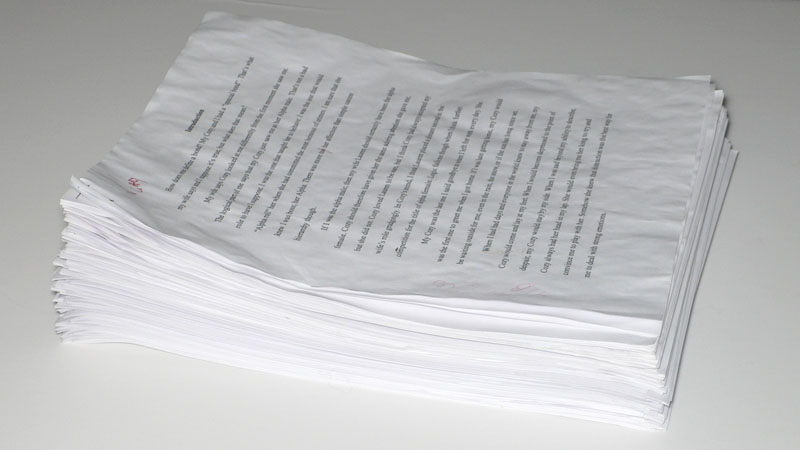
2nd Draft Manuscript

2nd Draft Manuscript

Writing a book is an arduous process. Anyone who says otherwise probably hasn’t written a book, or if they have, it likely hasn’t been published. As I wrote in my blog entry
What it Takes to be a Published Author, writing is harder than most people think. Sure it is sometimes easy to sit down and put words on paper, but almost 100% of the time, those words are crap. While the mechanics of writing are different for everyone, I thought some might be interested in how I approach the task of writing a book.

Stage 1: Stream of Consciousness Writing

The first step is to get all the garbage in my head onto paper. This is the easy part for me. Like most writers, I do have battles with writer’s block, but for the most part the task of articulating complex ideas comes easy to me. During this stage I work hard not to spend time correcting and fiddling with sentence structure. The ideas need to be translated to words, and that’s the task on which I try to focus. Grammar, word order and any other editing is saved for later revisions.

Some people like to write a paragraph and then fiddle with it until it reflects the perfection of a final draft. I prefer to get the entire story out of my head and into the computer as quickly as my fingers and aging brain will allow. This gives me the added benefit of completing the first draft much sooner than if I endlessly fiddled with each paragraph. Completing a draft is a pretty big milestone in any writing endeavor, and being an endorphin addict, I go for the fix as soon as I can. Once the first draft is done I proceed to dance with the dogs. I usually write late at night, so there is little risk of anyone seeing my 2:00 A.M. dance of completion.

Stage 2: First Draft Editing

Once the dancing is done and I’ve had some recovery sleep, I print out the entire thing and give it to my wife, Lauren. She reads it, marks it up with a red pen, and gives me her opinion regardless of whether it’s good or bad. She marks up typos and acts as my first line of defense against stupid, libelous or just plain bad writing.

When I get Lauren’s notes back, I set about the first draft editing process. The primary goal of this stage is to to get rid of the crap. I feel that a primary goal for any writer should be to use as few words as possible. As William Zinsser says in his fabulous book On Writing Well, “Clutter is the disease of American writing. We are a society strangling in unnecessary words, circular constructions, pompous frills and meaningless jargon.”

The stream of consciousness process from step one results in many unnecessary words. Entire chapters are often culled during my first draft editing since anything that doesn’t matter is unceremoniously deleted. Deciding what matters is a surprisingly easy process when it comes to chapters and paragraphs. Finding unnecessary words can be a more daunting task.

The removal of unnecessary words is, to me, the essence of writing. This stage of editing is what starts to make a great story from a good one. In the book I’m working on now, I had this clause in the first chapter: “I don’t know if that was true or not…”  The “or not” was completely superfluous. “I don’t know if that was true” by it’s very nature, includes the possibility that it was not true. the words “or not” were unnecessary. Master the skill of removing your own useless words and you’ll make a big leap towards becoming a better writer.

At the end of this stage I hope to have removed 30% of my text. There is no science in that number, but 30% makes me feel like I’ve done my job. The amount of work cut depends on how well I wrote the first draft.

Stage 3: Second Draft Editing

Sometimes I write chapters that flow like poetry written by angels. These masterpieces are invariably followed by rambling pages of nonsense written by a psychotic monkey on a Benadryl bender. Being responsible for every word, I set out to level the playing field. Since I don’t want to degrade the beauty of the great chapters, I endeavor to make the terrible work flow like poetry.

Making words flow is an art that many writers – even famous published ones – seem unable to grasp. A chapter that flows well is more enjoyable for the reader. A chapter that doesn’t flow well might be called choppy or described as all over the place. Often though, the reader will just put the book down in the store and walk away.

The goal of this stage is readability. Every sentence should flow with its own cadence, and it should lead the reader by the hand to the next sentence. The last sentence in each paragraph should entice the reader to continue to the next. Every sentence is a chance to to pull the reader deeper into my world or to lose them altogether.

A great way to test the flow of your writing is to read it aloud. As goofy as that sounds, it seems to work. I try to do this at home, since apparently some customers have a problem with me reading aloud in Starbucks.

Stage 4: Outside Editing

When all the pages have been purged of fluff and the entire work flows to my satisfaction, I start to like the book. Until I like the book, no one but Lauren gets to read it.

At this point I send copies to people who have agreed to edit my work in one way or another. I may choose someone because they have an advanced degree in English, or because they are a writer. I may choose someone who is an expert in the field of which I have written, or someone who just likes to read. The more feedback I can get from a variety of viewpoints, the better I can make the book. What is important to me here, is the quality of the feedback I get. I’m not going to give someone a copy only to get an “It was great – I really liked it” in return. That experience is reserved for paying customers.

I try not to touch the book until I get a response back, or for 30 days, whichever comes first. This lets me view the book as if it were new to me. Writing the same story every day for months means that I have become too close to the story. Taking a break lets me focus on it more as a reader would.

Stage 5: Final Editing

I may not use all of the feedback I get, but I take it all to heart. Sometimes what seems like a perfectly crafted sentence to me is confusing to someone else. If it confused one person, it will confuse others, so it is probably a good idea to tweak it a bit. If I’ve done my work in the first few stages well, this stage doesn’t take much time.

Stage 6: Submission

Off it goes into the harsh world of agents, publishers and the world at large. Edits beyond this point are as an agent or editor might request or demand. That’s a tale for another time.

Actual Status from Network Warrior

Actual Status from Network Warrior

Tracking Progress

For each book, I maintain a spreadsheet. For each stage I make a list of the chapters, how many pages and words are in each, and I check if it has been edited yet. This lets me track my progress and see visually how much work remains.

Final Thoughts

As a published author, one of the most common questions I get is “How did you do it?” People seem amazed that I could organize my thoughts over 600 pages. I try to view writing one sentence at a time, then one paragraph, then one chapter. Beyond that it’s like moving colored pencils in the box until they look nice. You don’t need to worry about how the pencils are made, but the order seems obvious when you look at them from a distance. So it is with chapters in my mind.

Writing is a very personal experience, so what works for me may not work for you. What matters is this: if you want to write, then write. The steps that I use help me write large projects. I hope that my experience might help you with yours.

Share and Enjoy:
  • Print
  • Facebook
  • del.icio.us
  • Digg
  • Sphinn
  • Mixx
  • Google Bookmarks
  • Blogplay
  • RSS
  • Technorati
  • LinkedIn
  • MySpace
  • Reddit

What it Takes to be a Published Author

Posted in Writing on August 30th, 2009 by GAD – 2 Comments
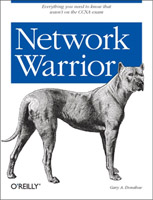
My first published book

My first published book

Being a published author, I am constantly told what an amazing achievement it is. I agree, but I’ve accomplished other things in my life that were much more difficult. I have a second degree black belt in Tae Kwon Do for example. Still, there is something mystical to most people about being published that transcends other accomplishments. Perhaps we all lust for fame. Though I’m far from famous, if you google my name, my webpage or book will come up first. I guess I’m the most famous Gary A. Donahue on the Internet today. All because I’m a published author.

So what does it take to be a published author? It takes more than being a writer. A writer is someone who writes. Anyone can be a writer. To be a published author, you need to, well, be published. In my experience, here are some of the reasons that I’m published:

  • Perseverance – This one is big, and deserves to be first. I bothered my contact at O’Reilly, Inc. literally for years before he contacted me about writing this book. He felt that my writing was solid, but every time I submitted a proposal, the timing was off, or the proposed subject had already been done. When he had an opportunity that matched my skills and styles, he thought of me because we had stayed in contact. Be polite, and try to establish a rapport. People buy from people is the adage I’ve heard used in sales, and it applies.
  • Write well – This may sound silly, but I assure you, many writers can’t write worth a damn. Being an O’Reilly author, I’ve been invited to help edit other books. Some of the writing was pretty awful, and some of it was pretty great. Some of the writing was fun to read, and some of it was dry. If the grammar and spelling is bad, the story, details and message will never be read. Similarly, if the story sucks, and the grammar is impeccable, it won’t sell. Even seasoned writers are constantly refining their craft.
  • Care about what you write – Similar to writing well, the idea of caring about what you write takes it a step further. Is it OK to use OK? Is there a better choice for a word? If you swap a word for a synonym, will the sentence flow better while retaining its meaning? How do your words sound when read aloud? Would you want to read what you’ve written? Every word is a building block to the final product. As Mark Twain said, “The difference between the right word and the wrong word is the difference between lightning and the lightning bug.” Use the right word.
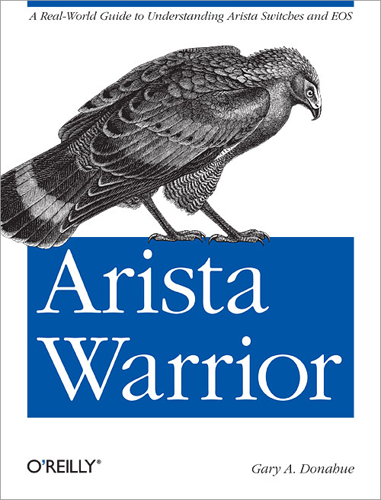
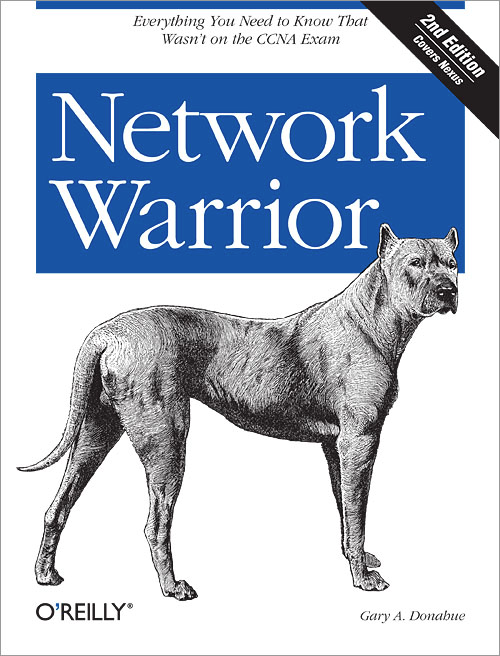
  • Write every day – One of the things I learned while writing Network Warrior was that I needed to write every day. If I didn’t get into the habit of writing, then I would go days or even weeks without accomplishing anything. My writing coincidentally, sucked. When writing every day, you’ll find that your writing will improve, and you’ll feel the need to write. A writer can’t help but write. For some this is the way they are wired. For others it’s a habit. Make writing a habit. I like Stephen Hunter’s take on this subject: “No matter which type [of writer] you are, you have to do it steadily, professionally, diligently, consistently. Otherwise here’s the type of writer you are: unpublished.”
  • Enjoy Editing – This was hard for me, since like many beginning writers, I was of the opinion that every sentence I wrote was perfect the first time I wrote it. Most successful  writers will tell you that the first draft of any manuscript is crap. Putting thoughts on paper is only the first step. I would go so far as to estimate that writing the first draft is at most, 25% of the process. In the case of a book being published, 10% might be more accurate. In William Zinsser’s excellent book, On Writing Well, he teaches that you should take any first draft and work on cutting it in half through editing. Not by deleting sections, though that may be necessary, but by removing unnecessary words. Every “He took a deep long breath of fresh cold, clean air” can be replaced with, “He took a deep breath”. Enjoying the editing process will make you a better writer. Don’t get attached to your edited manuscript though. Better editors will further reduce or change it during the publishing process.
  • Be Patient – writing takes time. Editing takes time. The many steps of publishing take time. Writing, as an activity or profession is not a thrill-seeking activity. Many hours are spent alone in front of a computer. When I’m in stream of consciousness mode, I can bang out 10 single spaced pages a day. Cut that to about three or four when writing about technology. That doesn’t include editing. Most publishers move slowly as well. From start to finish, my first technical book took me eighteen months. I could do it in less time today, but I’d still anticipate at least a year. If you’re dream is to have 10 books published, you better get to work. John Grisham, best selling author of many books including The Pelican Brief, spent three years on his first novel A Time to Kill.
  • Writing is harder than most people think – If you haven’t figured it out yet, writing is hard work. Many people think that they’ll write in their spare time and make millions of dollars. While John Grisham did just that with his first novel, it took him three years. It was also rejected repeatedly at first which brings us to the last bullet.
  • Enjoy rejection – The Pelican Brief was rejected by many publishers until Wynwood Press bought it. They gave it a modest 5000 copy first printing. As of 2009, Josh Grisham has sold over 60 million copies of his many books. If he had given up after his first rejection, or even his first ten rejections, we would not have films like The Pelican Brief, The Firm, and A Time to Kill, not to mention many others.

I can hear some of you asking, if writing is so damned difficult, why do you do it?

I need to write. I can’t help myself.

GAD

Share and Enjoy:
  • Print
  • Facebook
  • del.icio.us
  • Digg
  • Sphinn
  • Mixx
  • Google Bookmarks
  • Blogplay
  • RSS
  • Technorati
  • LinkedIn
  • MySpace
  • Reddit


Back to:    GAD.net   Newf.net   Email:   gad@gad.net Copyright ©2010 Gary A. Donahue